
 United States
Are Daily Contacts More Expensive? The Real Cost Breakdown You Need to See

Paul Slusher
CEO
Published Jun 22nd, 2026
You have probably heard it before: daily contacts cost more. Looking at the sticker price alone, that is true. Daily disposable contacts can run $600 to $900 per year, while monthly lenses run $200 to $400 per year. Case closed, right?
Not quite.
That price comparison in terms of are daily contacts more expensive ignores everything you actually spend to wear monthly lenses: solution bottles, lens cases, and the occasional eye infection that sends you to the doctor. Once those costs are added in, the gap between daily and monthly contacts shrinks considerably, and for some wearers, dailies can end up costing less overall.
Daily disposables have grown to make up a substantial share of the contact lens market in recent years. That shift did not happen because people enjoy spending more money. It happened because more shoppers started calculating the true cost of ownership rather than comparing box prices alone.
This article breaks down what daily contacts actually cost compared to monthly lenses, looks at the hidden expenses most comparisons skip over, and shows the specific situations where dailies can save you money. Whether you have dry eyes, astigmatism, or simply want to understand your options, you will come away with a clearer picture of what makes sense for your situation.
The Upfront Price Difference Between Daily and Monthly Contacts
What the Sticker Price Tells You
The basic math looks lopsided at first glance. Daily lenses require roughly 730 lenses per year for both eyes, while monthly lenses require just 24 lenses annually. When you need far more product, you naturally pay more for it.
Daily disposable contacts typically cost between $50 and $75 per month. Monthly lenses, by contrast, might cost $25 to $35 per box, and you would need around four boxes per year for both eyes, putting the lens cost alone at roughly $100 to $140 annually.
Looking only at these numbers, monthly contacts seem like the clear budget winner. A shopper comparing boxes on a shelf would reasonably conclude that dailies cost several times as much as monthlies.
That comparison is incomplete, though. It omits what monthly lens wearers actually spend over the year, and those additional costs meaningfully affect the calculation.
The Hidden Costs Most Comparisons Miss
What Monthly Lenses Actually Cost You
Monthly lenses do not arrive ready to wear straight from the box each day. They require ongoing maintenance, and that maintenance costs money.
Contact lens solution is the biggest hidden expense. Quality multipurpose solution typically runs $50 to $80 per year. You need a solution every day to properly clean, rinse, and store your lenses. Skip a day, and you risk contamination; buy a cheap solution, and you risk irritation.
Lens cases add another modest annual cost, since optometrists generally recommend replacing your case every few months as bacteria accumulate. Many wearers skip this step, which increases the risk of infection.
Daily lens wearers avoid both of these costs entirely. No cleaning, no storage, no solution purchases.
Here is the adjusted picture:
The True Monthly Lens Cost
- Lens boxes: $200 to $400 per year
- Solution: $50 to $80 per year
- Lens cases: $10 to $20 per year
- Adjusted total: $260 to $500 per year
Compared to $600 to $900 for dailies, the gap narrows considerably. Still a real difference, but nowhere near the chasm the sticker prices alone suggest.
The Infection Risk Factor
Eye infections carry real financial costs: doctor visits, prescription drops, missed work, and in more serious cases, extended treatment or specialist referrals.
Research generally indicates a meaningful difference in infection rates between the two wear schedules, with daily disposables associated with a notably lower risk of serious eye infection than monthly reusable lenses. The absolute numbers involved are low for both groups, which is good news for contact lens wearers generally, but for an individual who experiences an infection, treatment costs can run into the hundreds of dollars. Factor in the discomfort, inconvenience, and potential for complications, and infection risk becomes another real line item in a true cost comparison, not just a scare tactic.
When Daily Contacts Actually Save You Money
The Part-Time Wearer Calculation
Here is where the math flips, and it is a scenario most cost comparisons skip entirely.
If you wear contacts only three to four days per week, monthly lenses become surprisingly wasteful, because you discard the lens after 30 days, whether you wore it 30 times or 12 times. Monthly contacts have a calendar-based expiration, not a usage-based one. Once you open a lens, the countdown begins regardless of how often you actually wear it.
Consider a part-time wearer who uses contacts around 15 days a month. That works out to roughly 360 daily lenses per year rather than 730, bringing the annual cost down considerably and putting it in a similar range to monthly lenses plus solution, or sometimes lower.
Example: A wearer who wears contacts only on weekends would use far fewer lenses annually, often making dailies the clearer budget choice once the math is run based on actual wear days rather than assuming full-time use.
This scenario applies to more people than you might expect, including those who alternate between glasses and contacts depending on the day, weekend athletes who wear contacts for sports, occasional social wearers who prefer contacts for events, and anyone with a hybrid glasses-and-contacts lifestyle.
If you do not wear contacts every day, it is worth running the numbers based on your actual wear schedule. Dailies might cost you less than you assume.
Manufacturer Rebates Can Close the Gap Further
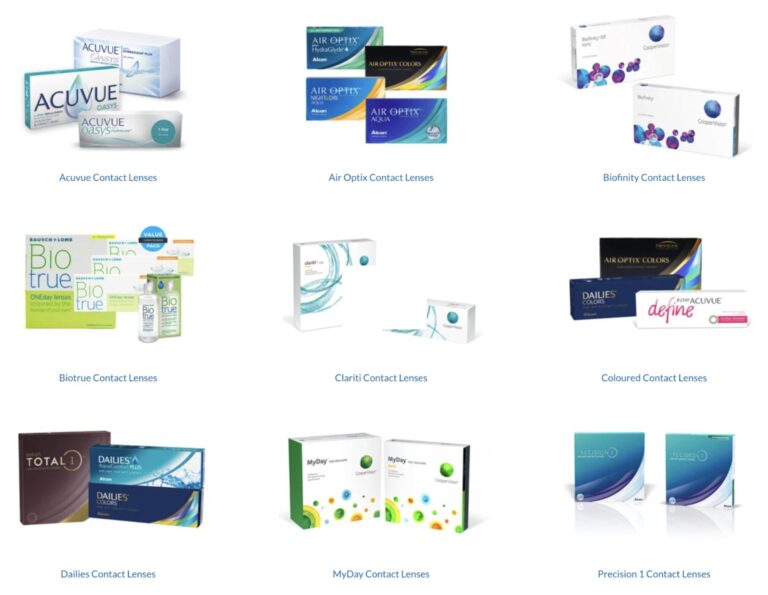
Major contact lens manufacturers, including Acuvue, Alcon, CooperVision, and Bausch and Lomb, offer rebate programmes on annual supplies. These rebates can meaningfully reduce daily lens costs when you purchase a year’s supply at once.
Rebate programmes vary by brand and season, so it is worth checking current offers before comparing final prices. At Contacts For Less, we carry all major brands that are typically eligible for manufacturer rebates, making it easier to take advantage of these savings and further narrow the gap with monthly lenses.
Are Daily Contacts Better for Dry Eyes?
This is one of the most common questions from contact lens shoppers, and the answer often tips in favour of dailies.
Eye care professionals frequently recommend daily disposables for dry eye sufferers. The reasoning is fairly simple: a fresh lens every day means no protein or lipid buildup accumulating on the lens surface. With monthly lenses, natural deposits from your tears build up over the wear cycle, and even with diligent cleaning, some residue tends to remain. That buildup can worsen dryness and discomfort, particularly in the final stretch before lens replacement.
Daily disposables sidestep this problem entirely since every morning starts with a fresh lens surface. Some wearers also develop sensitivity to the multipurpose solutions used to clean monthly lenses, an issue daily wearers never encounter since they do not use the solution at all.
Premium daily lenses like Dailies Total1 and Acuvue Oasys 1-Day feature moisture-retention technology designed specifically for all-day comfort. These lenses cost more than basic dailies, but for dry eye wearers, the comfort improvement often justifies the price difference.
Why Eye Care Professionals Often Recommend Dailies for Dry Eyes
- Fresh lens means no buildup of deposits that worsen dryness
- No solution sensitivity, since dailies require no cleaning solution
- Premium dailies feature advanced moisture technology
If you have persistent dry eye symptoms, consult your eye care professional for personalised guidance, since the right lens choice depends on your specific condition and tear film characteristics. For more on this topic, see our complete guide to the best contacts for dry eyes.
Are Daily Contacts Better for Astigmatism?
Daily toric lenses, designed for astigmatism correction, have grown in popularity despite typically carrying a price premium over standard daily lenses.
Astigmatism is a common vision correction need, yet many wearers settle for monthly torics without considering daily options. Toric lenses require a precise fit and orientation to correct astigmatism properly, and the lens needs to sit in the right position on your eye for clear vision. With monthly torics, performance can shift over the wear cycle as deposits accumulate and the lens material changes subtly.
Daily disposable torics offer more consistent day-to-day performance, without the gradual buildup or variation that can affect monthly torics later in their cycle. For astigmatism wearers who struggle with lens rotation, late-cycle discomfort, or inconsistent vision quality on monthlies, daily torics can deliver noticeably better results. The premium is real, but so is the improvement many wearers experience in vision clarity and comfort.
If you have astigmatism and value consistent, crisp vision throughout every day of wear, daily torics may offer better overall value than the lower sticker price of monthly alternatives suggests. Browse our selection of toric lenses for astigmatism to compare options.
Daily vs Monthly Contacts: Cost Comparison Table
| Factor | Daily Contacts | Monthly Contacts |
| Annual lens cost | $600 to $900 | $200 to $400 |
| Solution cost | $0 | $50 to $80 per year |
| Lens case cost | $0 | $10 to $20 per year |
| Total annual cost | $600 to $900 | $260 to $500 |
| Infection risk | Lower | Higher |
| Cleaning required | No | Yes, daily |
| Best for | Dry eyes, part-time wear, travel, convenience | Full-time wearers on tighter budgets |
Prices are approximate ranges and vary by brand, prescription complexity, and retailer. For a deeper comparison of these two modalities, see our detailed guide on daily vs monthly contacts.
Can You Wear Daily Contacts for Two Days?
This question comes up often, and the answer is unambiguous: no, and doing so puts your eye health at risk.
Daily disposable lenses are designed for single-day use only. The lens material, thickness, and oxygen transmission are all engineered around one wear, not two. Research has found that daily-use lenses carry a high rate of bacterial contamination, since the thin lens material is not designed to withstand cleaning, and storing them overnight in a solution they were never intended for poses a real contamination risk.
Daily lenses are thinner than monthly lenses precisely because they do not need to withstand repeated wear and cleaning. That thinness is part of what makes them comfortable, but it also makes them unsuitable for extended use.
Reusing daily lenses to save money can lead to eye infections, corneal damage, and ultimately higher costs in medical treatment than the original savings were worth. If budget is your main concern, monthly lenses with proper care are a far safer choice than stretching dailies beyond their intended use.
Never Reuse Daily Contacts
Reusing daily lenses, even once, meaningfully increases your risk of eye infection. If budget is a concern, monthly lenses with proper cleaning are a safer choice than stretching dailies.
Common Pitfalls When Comparing Contact Lens Costs
Ignoring solution and case costs. Always factor in the full cost of monthly lens ownership, not just the box price.
Forgetting rebates exist. Check manufacturer rebate programmes before assuming dailies are out of budget, since a meaningful rebate can shift the math considerably.
Buying the wrong quantity for your wear schedule. Part-time wearers often waste money on monthly lenses they do not fully use. Calculate your actual wearing days before choosing a modality.
Reusing daily lenses to save money. This poses a real risk of infection and can lead to costly medical bills down the line.
Not considering your specific needs. Dry eyes and astigmatism may justify the daily lens premium for comfort and vision quality. Generic cost comparisons do not account for your individual situation.
Skipping the online retailer comparison. Brick-and-mortar optical shops often charge noticeably more than online retailers for the same lens. For guidance on finding the best prices, see our article on how to find affordable contacts in Canada.
How to Choose: Daily or Monthly?
Daily contacts may be right for you if:
- You have dry eyes or sensitivity
- You wear contacts part-time (roughly 3 to 5 days per week or less)
- You travel frequently and want hassle-free lens care
- You have allergies or work in dusty environments
- You value convenience over the lowest possible price
- You have astigmatism and want consistent daily vision
Monthly contacts may be right for you if:
- You wear contacts every day and want the lowest annual cost
- You are comfortable with daily cleaning routines
- You have a stable prescription and no dry eye issues
- Budget is your top priority, and you will commit to proper lens care
For a more detailed comparison of these two wear schedules, including lifestyle considerations and brand recommendations, read our full guide on daily vs monthly contact lenses.
Making the Right Choice for Your Eyes and Budget
Daily contacts do cost more at the checkout counter. That part is not in question. But the sticker price tells only part of the story.
Once you factor in solution costs, lens case replacement, and infection risk, the annual cost gap between dailies and monthlies shrinks considerably. For part-time wearers, dailies can sometimes cost less overall. For dry eye sufferers and astigmatism wearers, the comfort and vision quality improvements often justify whatever premium remains.
Key takeaways:
- Daily contacts typically run $600 to $900 per year, while monthly lenses run closer to $260 to $500 per year once supplies are included
- Part-time wearers may end up spending less with dailies than with monthlies
- Manufacturer rebates can meaningfully reduce daily lens costs on annual supplies
- Daily lenses are associated with lower infection risk and tend to perform better for dry eyes and astigmatism
- Never reuse daily contacts to save money; the health risks outweigh any savings
The best choice depends on your lifestyle, prescription needs, and wear schedule, not just your budget. Calculate your own total cost based on how many days you actually wear contacts, whether you need specialty lenses for dry eyes or astigmatism, and what rebates are currently available.
Next steps:
- Count your actual wearing days per month to calculate your real annual lens needs
- Check current manufacturer rebates for brands you are considering
- Factor in solution costs if you are leaning toward monthly lenses
- Consult your eye care professional if you have dry eyes or astigmatism
Browse our full selection of daily and monthly contact lenses at Contacts For Less. As a 100% Canadian family-owned company, we donate a portion of every sale to the charity you choose, so your order does more than save you money.
We will never sell your information to anyone.