
 United States
Daily vs Monthly Contacts: Which Is Right for Your Eyes, Lifestyle, and Budget?

Paul Slusher
CEO
Published Jun 11th, 2026
Reusable contact lenses carry significantly higher odds of developing serious eye infections compared to daily disposables, according to a landmark University College London study (Ophthalmology Journal, 2022). Yet monthly lenses remain popular, and for good reason. The daily vs monthly contacts debate is not as straightforward as infection statistics alone suggest. Cost, comfort, lifestyle, and prescription type all factor into the right choice for your eyes.
Here is what most comparison guides miss: the true annual cost difference between daily and monthly contacts is often far smaller than the sticker price suggests. When you factor in manufacturer rebates, solution costs, and cost-per-wear for part-time wearers, the math shifts dramatically.
Daily disposables now account for a substantial share of new soft lens fittings, and optometrists frequently recommend them when prescribing for new wearers. But that does not mean monthlies are obsolete. For full-time wearers on a budget, monthly lenses still offer real value.
This guide breaks down everything you need to know: hygiene and safety differences, the real cost comparison with rebates included, lifestyle fit, and specific guidance for astigmatism and dry eye wearers. By the end, you will have the information you need to make the right choice for your situation.
What Is the Actual Difference Between Daily and Monthly Contacts?
The distinction between daily and monthly contacts comes down to one thing: replacement schedule.
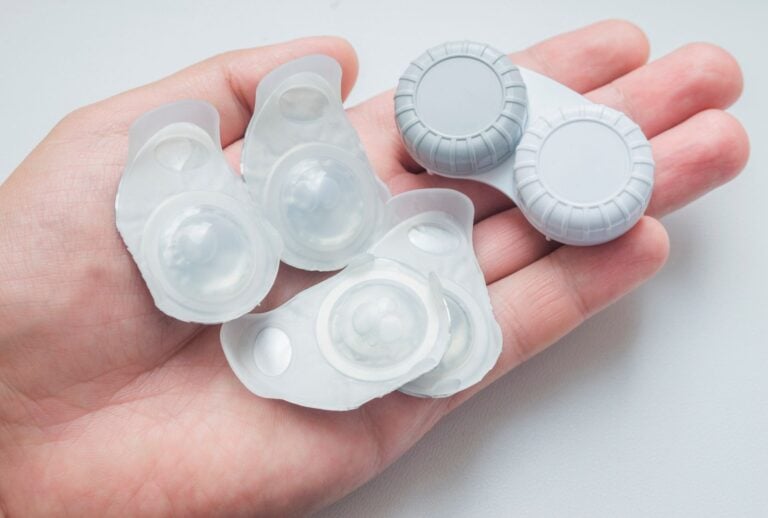
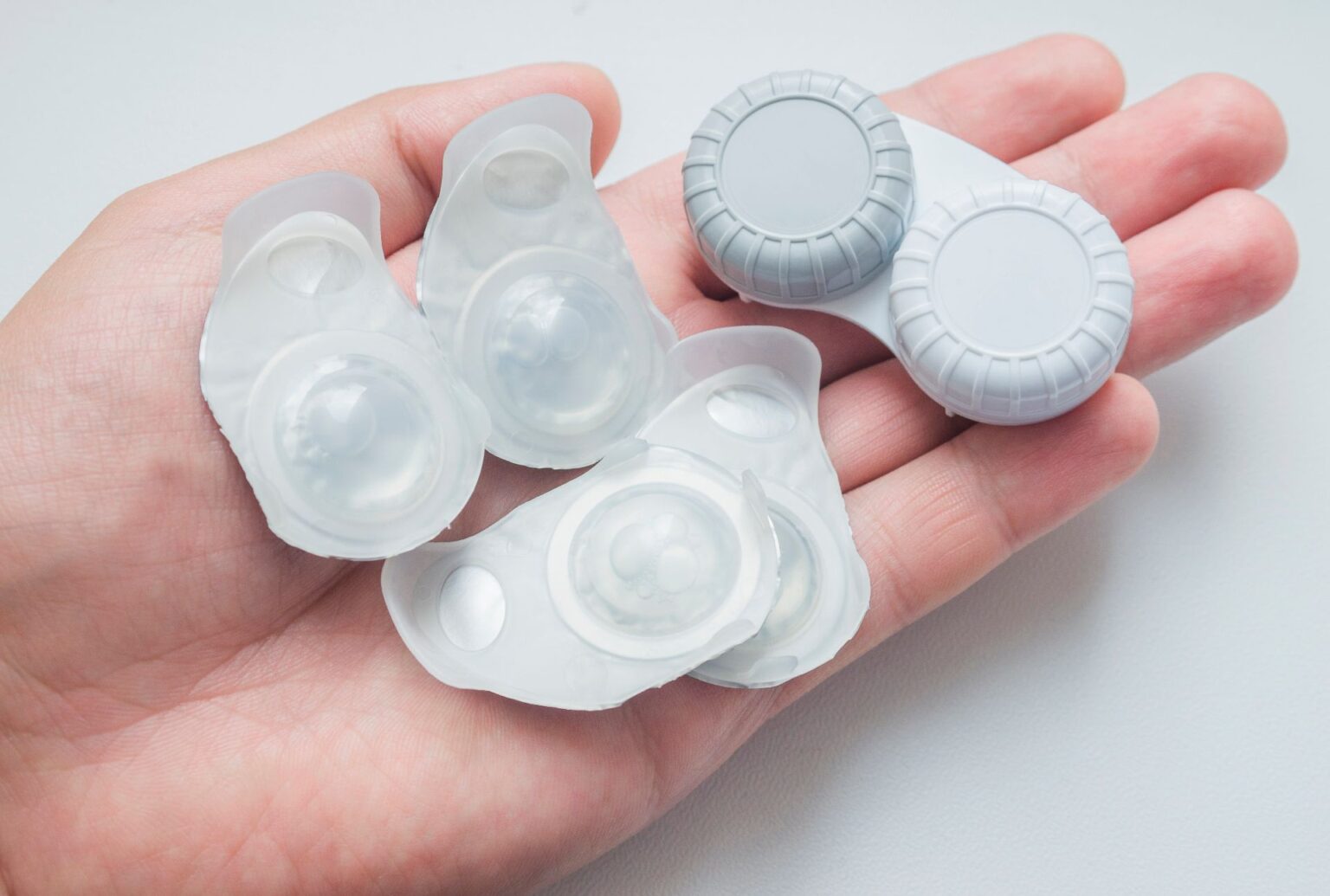
Daily disposable lenses are worn once and discarded at the end of the day. You open a fresh, sterile lens each morning and throw it away before bed. No cleaning, no storage solution, no lens case required.
Monthly lenses are designed to be worn daily for up to 30 days. You remove them each night, clean them with contact lens solution, store them in a case, and reinsert them the next morning. After 30 days of wear, you open a new pair.
Both lens types now commonly use silicone hydrogel materials, which allow significantly more oxygen to reach your cornea compared to older hydrogel materials. This matters for eye health during all-day wear.
One common source of confusion: “monthly” means 30 days of use, not 30 calendar days sitting in your drawer. If you wear your lenses only three days per week, they still need replacing after 30 wears or 30 calendar days, whichever comes first. This detail matters significantly for part-time wearers, as we cover in the cost section below.
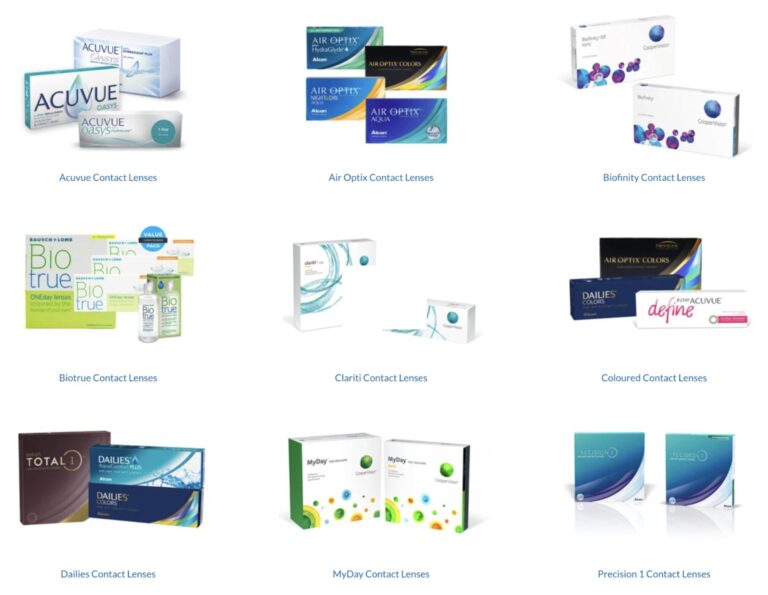
Popular daily lenses include Acuvue Oasys 1-Day, Dailies Total 1, MyDay, and Biotrue ONEday.
Popular monthly lenses include Air Optix Plus HydraGlyde, Biofinity, and Bausch and Lomb Ultra.
Quick Clarification: Daily vs monthly refers to how often you replace the lens, not how long you can wear it each day. Both types are typically worn during waking hours and removed before sleep.
One more common question worth addressing: are daily and monthly contacts the same prescription? Yes. The prescription parameters (power, base curve, diameter) are identical regardless of the replacement schedule. Your optometrist determines these measurements based on your eyes. The difference between daily and monthly lenses lies in their design and wear schedules, not in the optical correction.
Pros and Cons of Daily vs Monthly Contacts
Understanding the tradeoffs helps you make a more informed choice. Here is a balanced breakdown of what each lens type offers.
Daily Disposable Advantages
- Fresh, sterile lens every single day
- No cleaning routine required
- Lower infection risk due to no overnight storage
- Ideal for travel, sports, and occasional wear
- No spending on contact lens solution
- Better option for allergy sufferers since pollen and debris do not accumulate on the lens
Daily Disposable Disadvantages
- Higher upfront cost per box
- More packaging waste per wear
- Requires ordering more boxes per year
Monthly Lens Advantages
- Lower per-box cost
- Fewer boxes to order annually
- Familiar routine for long-time wearers
- Lower environmental footprint in terms of packaging
Monthly Lens Disadvantages
- Requires daily cleaning discipline
- Solution costs add roughly $100 per year
- Higher infection risk if care routine lapses
- Lens comfort can degrade toward the end of the 30-day cycle
- Risk of contamination from lens cases
The infection risk difference deserves attention. Sleeping in contacts increases eye infection risk substantially, regardless of lens type, but daily wearers who fall asleep can simply discard the lens rather than risk contamination in a storage case.
| Factor | Daily Disposables | Monthly Lenses |
| Replacement schedule | Every day | Every 30 days |
| Cleaning required | No | Yes (daily) |
| Solution cost | $0 | ~$100/year |
| Infection risk | Lower | Higher for serious infections |
| Upfront cost per box | Higher | Lower |
| Best for | Occasional wearers, travel, allergies, dry eyes | Full-time wearers on a budget |
Daily vs Monthly Contacts Cost: The Real Numbers
Cost is where most shoppers make their decision, and it is also where most comparisons go wrong with the math.
Upfront Cost vs Annual Cost
The sticker shock is real. A 90-pack of daily lenses might cost $75 to $95, while a 6-pack of monthly lenses runs $50 to $70. At first glance, dailies seem dramatically more expensive.
What most comparisons overlook is solution costs, case replacements, and manufacturer rebates.
Monthly wearers spend roughly $100 per year on contact lens solution alone. Daily wearers spend nothing on a solution. That $100 gets added to the monthly lens annual cost, but rarely appears in comparison charts.
Then there are rebates. This is where the daily vs monthly contacts cost comparison gets particularly interesting.
Major manufacturers offer substantial rebates on daily lenses. Rebate programs from brands like Acuvue, Alcon, and CooperVision can deliver meaningful annual savings for daily lens wearers. Monthly lens rebates are typically more modest by comparison.
Here is a real example:
Daily wearer (full-time, both eyes):
Acuvue Oasys 1-Day 90-pack: approximately $85 per box
Annual need: 4 boxes per eye = $340 per eye, $680 total
After $200 rebate: $480 net annual cost
Monthly wearer (full-time, both eyes):
Biofinity 6-pack: approximately $55 per box
Annual need: 2 boxes per eye = $110 per eye, $220 total
Plus $100 solution cost = $320
After $40 rebate: $280 net annual cost
The gap is roughly $200 per year, not the $400-plus difference shoppers expect when comparing box prices alone. For some lens combinations, daily disposables can actually cost less than monthlies after rebates are applied.
Do Not Forget Rebates: Check current manufacturer rebate programs before assuming dailies are out of your budget. These programmes can meaningfully reduce your annual cost.
Cost-Per-Wear for Part-Time Wearers
Here is where the math gets overlooked: what if you do not wear contacts every day?
If you only wear contacts three or four days per week, monthly lenses lose their cost advantage entirely. Monthly lenses must be replaced every 30 calendar days, even if you have only worn them a dozen times. Part-time wearers effectively pay for unused wear days with monthlies. With dailies, you only pay for the days you actually wear them.
Cost-per-wear formula: box cost divided by lenses per box = cost per wear day
Example for a part-time wearer (3 days per week, 156 wear days per year):
Dailies: approximately $0.95 per lens x 156 wear days = $148 per eye per year
Monthlies: 12 monthly lenses per year at approximately $9 each = $108 per eye, plus a share of $100 solution cost = $158 per eye per year
For occasional wearers, dailies often win on pure economics.
Are You a Part-Time Wearer? Dailies May Be Your Best Value If:
- You wear contacts 4 days per week or fewer
- You alternate between glasses and contacts regularly
- You only wear contacts for sports, events, or travel
- You often forget to wear your monthlies before the 30-day replacement window closes
Daily vs Monthly Contacts for Dry Eyes
If you struggle with dry, uncomfortable eyes while wearing contacts, the lens replacement schedule matters more than you might think.
Daily lenses are often recommended for dry eye sufferers because you start with a fresh lens every day. Over time, even with proper cleaning, monthly lenses accumulate protein and lipid deposits from your tear film. These deposits reduce the lens’s ability to retain moisture, worsening dryness as the month progresses. With dailies, there is no buildup, and every morning you insert a lens with optimal moisture retention.
Premium daily options designed specifically for dry eyes include:
- Dailies Total 1: Uses water gradient technology where the outer lens surface is designed to approach very high water content for exceptional surface comfort
- Acuvue Oasys 1-Day with Hydraluxe: Features a tear-infused design for all-day comfort
- Biotrue ONEday: Formulated to work in harmony with your eye’s natural biology for sustained moisture
That said, some monthly lenses address dryness effectively. Air Optix Plus HydraGlyde uses a moisture matrix technology, and Bausch and Lomb Ultra’s MoistureSeal technology is designed to maintain moisture throughout the day. The key difference is that even these advanced monthlies can lose some performance as deposits accumulate over the wear cycle.
For persistent dry eye symptoms, consult your optometrist, as underlying causes may need treatment beyond lens selection alone. Our guide to the best daily contacts for dry eyes provides more detailed product recommendations.
Are Daily or Monthly Contacts Better for Astigmatism?
Astigmatism does not automatically mean you need monthly lenses. Toric lenses, which correct astigmatism, are now available in both daily and monthly options.
The daily toric market has expanded significantly in recent years. Options include:
- Acuvue Oasys 1-Day for Astigmatism
- Dailies AquaComfort Plus Toric
- MyDay Toric
- Biotrue ONEday for Astigmatism
In 2025, Johnson & Johnson launched Acuvue Oasys Max 1-Day Multifocal for Astigmatism, the first daily-disposable lens designed for people with both astigmatism and presbyopia. Previously, this combination typically required monthly lenses.
Monthly toric options like Biofinity Toric and Air Optix for Astigmatism remain solid choices for full-time wearers who prefer fewer lens changes and want to keep costs down.
For astigmatic wearers with dry eyes or allergies, dailies often make more sense. Toric lenses require precise positioning to correct astigmatism properly, and deposit buildup on monthly torics can affect stability and rotation over the wear cycle, potentially affecting vision quality toward the end.
For a complete breakdown, see our guide to the best contact lenses for astigmatism.
Safety and Infection Risk: What the Research Shows
The University College London study deserves a fuller context. The significantly higher infection risk for reusable lenses specifically refers to Acanthamoeba keratitis, a serious and potentially sight-threatening infection caused by a microscopic organism (Ophthalmology Journal, 2022). The study estimated that a substantial proportion of UK Acanthamoeba keratitis cases could potentially have been prevented by switching to daily disposables.
Why is the risk higher for reusable lenses? The cleaning and storage routine itself creates opportunities for contamination. Contact lens cases are common sources of microbial growth, and many wearers, despite good intentions, take shortcuts:
- Topping off the old solution instead of replacing it completely
- Not rubbing lenses during cleaning
- Using cases past their recommended replacement date
- Exposing cases to tap water
Daily lenses are not immune to problems. Wearing a daily lens for two days, or reinserting one after removing it mid-day, eliminates the safety advantage entirely. The benefit comes specifically from the single-use design: no care routine to skip, meaning no opportunities for contamination from improper storage.
The Nap Question: The CDC advises against sleeping or napping in contact lenses of any type. If you nap frequently, daily lenses let you simply remove and discard rather than risk contaminating a storage case.
A Special Case: Keratoconus
Keratoconus is a progressive condition where the cornea thins and bulges into a cone shape, causing irregular astigmatism that standard glasses and soft contact lenses (daily or monthly) typically cannot fully correct.
For moderate-to-advanced keratoconus, scleral lenses have become the gold standard. These are rigid gas permeable lenses that vault over the entire cornea, creating a smooth optical surface that corrects irregular curvature in a way standard soft lenses cannot replicate.
Scleral lenses are an entirely different category from standard daily or monthly soft contacts. If you have keratoconus, work directly with a corneal specialist or optometrist experienced in specialty lens fitting. The standard daily vs monthly comparison does not apply to your situation.
Common Pitfalls When Choosing Between Daily and Monthly Contacts
Pitfall 1: Ignoring Rebates in Cost Comparisons
Shoppers frequently compare sticker prices without factoring in manufacturer rebates. Always check current rebate programmes before making a decision based on box price alone.
Pitfall 2: Stretching Lens Wear Beyond the Recommended Schedule
Wearing a daily lens for two days or a monthly lens for six weeks may seem like a money-saving move. Overworn lenses accumulate deposits, reduce oxygen transmission, and dramatically increase the risk of infection. The perceived savings are not worth the potential medical costs and vision problems.
Pitfall 3: Not Accounting for Solution Costs
Monthly lens wearers spend roughly $100 annually on solution. This recurring cost rarely appears in comparison charts but significantly affects your true annual expense.
Pitfall 4: Choosing Based on What a Friend Uses
Contact lens selection should be based on your prescription, tear film quality, wear schedule, and lifestyle. What works for someone else may not suit your eyes.
Pitfall 5: Forgetting to Factor in Wear Frequency
Part-time wearers often default to monthlies, assuming they are cheaper. If you wear contacts fewer than four days per week, dailies often cost less per wear.
Pitfall 6: Skipping the Optometrist
Both daily and monthly lenses require a valid prescription based on a professional fitting. Our guide to getting contacts walks through the full process for first-time wearers.
Making Your Decision: A Practical Framework
Consider Daily Disposables If You:
- Wear contacts part-time (4 days per week or fewer)
- Have dry eyes or seasonal allergies
- Travel frequently
- Prefer no maintenance routine
- Sometimes, I fall asleep wearing contacts
- Want the lowest infection risk
- Are you willing to check manufacturer rebates
Consider Monthly Lenses If You:
- Wear contacts full-time, every day
- Are disciplined about cleaning routines
- Want the lowest upfront box cost
- Are comfortable with solution costs and storage
- Have been wearing monthlies successfully without comfort issues
Consider Talking to Your Optometrist If You:
- Have persistent dry eye symptoms
- Struggle with lens comfort in the final week of a monthly cycle
- Have both astigmatism and presbyopia
- Experience frequent eye irritation or redness
- Have not had a comprehensive exam in over a year
For more guidance on exam timing, see our article on how often you need an eye exam for contact lenses.
Key Takeaways
The daily vs monthly contacts decision comes down to your lifestyle, budget, and eye health priorities. Here is what matters most:
Infection risk favours dailies. Reusable lenses carry significantly higher odds of serious eye infections compared to daily disposables (UCL/Ophthalmology Journal, 2022). If you sometimes skip cleaning steps or nap in your lenses, dailies offer a built-in safety margin.
The real cost gap is smaller than it appears. After factoring in solution costs (roughly $100 per year for monthlies) and manufacturer rebates, the annual difference is often far less than the sticker price gap suggests.
Part-time wearers often save money with dailies. If you wear contacts fewer than four days per week, the cost-per-wear math frequently favours daily disposables.
Daily options now exist for astigmatism and presbyopia. You are no longer limited to monthly lenses for specialty prescriptions.
Dry eye sufferers typically do better with dailies. Fresh lenses every day mean no protein buildup and consistent moisture throughout wear.
Next Steps
- Check your current prescription. Confirm it is valid and note whether you have astigmatism, presbyopia, or a standard spherical correction.
- Calculate your true annual cost. Factor in how many days per week you wear contacts, solution costs for monthlies, and available manufacturer rebates.
- Consider your lifestyle honestly. Be realistic about whether you will maintain a cleaning routine or benefit from the simplicity of daily wear-and-discard.
- Talk to your optometrist. If you are experiencing discomfort with your current lenses or want to switch, a professional fitting ensures proper lens selection.
- Compare prices. As a Canadian family-owned company, we offer competitive pricing on all major brands and donate a portion of every sale to the charity of your choice.
Ready to find the right lenses for your eyes? Browse our complete selection of daily and monthly contact lenses with free shipping on orders across Canada.
We will never sell your information to anyone.