
 United States
How Much Does an Eye Exam for Contacts Cost? Your Complete Pricing Guide

Paul Slusher
CEO
Published Jun 10th, 2026

A contact lens exam can cost anywhere from $79 to $250+, depending on where you go, and most shoppers overpay simply because they don’t know their options. The pricing gap between a budget-friendly retailer and a private practice can exceed $150 for the exact same service.
Here’s what makes this confusing: an eye exam for contacts isn’t the same as a standard vision exam. When you want contact lenses, you’re paying for additional measurements, fitting time, trial lenses, and often a follow-up visit. These extra steps explain the higher price tag, but they don’t explain why costs vary so dramatically between providers.
Approximately 45 million Americans wear contact lenses (Vision Center, citing National Eye Institute, 2025–2026), yet transparent pricing remains surprisingly difficult to find. Most optical retailers don’t advertise their contact lens fitting fees upfront, leaving shoppers to discover the full cost at checkout.
This guide breaks down actual 2026 pricing at major retailers like Walmart, Costco, and America’s Best. We’ll explain exactly what’s included in a contact lens exam, reveal where to find the lowest prices, and share strategies to reduce your total annual spend on both exams and lenses.
What’s Included in a Contact Lens Exam?
A contact lens exam includes everything in a comprehensive eye exam, plus several additional steps specific to contact lens fitting. Understanding what you’re paying for helps you evaluate whether a provider’s price represents fair value.
Every contact lens exam typically includes:
- Refraction testing to determine your exact prescription
- Eye health evaluation, checking for conditions that might affect lens wear
- Corneal curvature measurement (keratometry) to determine lens fit
- Tear film assessment to evaluate if your eyes produce enough moisture for comfortable lens wear
- Contact lens fitting where the doctor selects appropriate trial lenses
- Trial lens evaluation to check vision and comfort with actual lenses on your eyes
- Follow-up visit to verify the fit remains stable after a week or two of wear
These additional measurements require more chair time, specialized equipment, and clinical expertise. That’s why a contact lens exam costs more than a glasses-only exam.
Specialty fittings cost even more. If you have astigmatism, you’ll need toric lenses. If you’re over 40 and need help with reading, you’ll need multifocal lenses. These specialty fits often add $50 to $100+ to the base exam fee because they require more complex measurements and multiple trial lens attempts to achieve optimal vision (EyeCare Associates, 2025–2026).
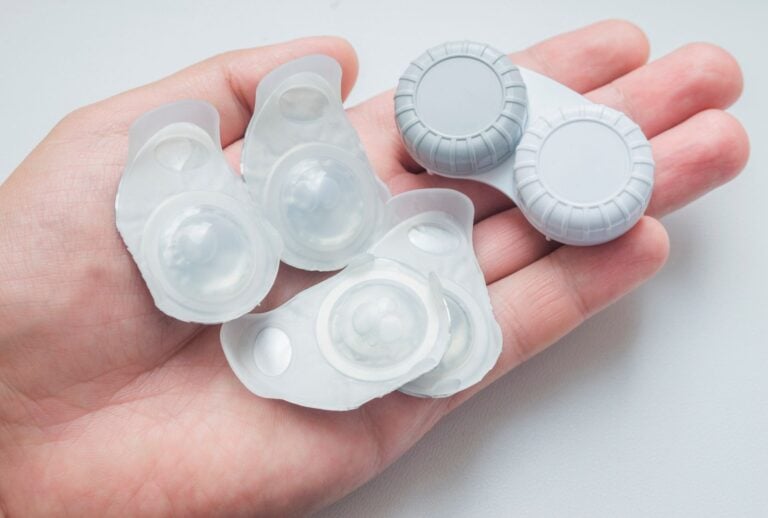
Pro Tip: Remove your contact lenses at least 2 to 4 hours before your exam (longer for rigid gas permeable lenses) so your corneas return to their natural shape for accurate measurements. Wearing contacts to your exam can distort your prescription results.
If you’re researching how to get contacts for the first time, understanding this process helps you know what to expect and ask the right questions before booking.
How Much Does a Contact Lens Exam Cost at Walmart, Costco, and Other Providers?
Pricing varies significantly between providers, and the lowest advertised exam fee doesn’t always mean the lowest total cost. Here’s what you’ll actually pay at major retailers in 2026.
Walmart Vision Center
Walmart offers some of the most competitive exam pricing among national retailers. Their base comprehensive eye exam runs approximately $79, while the contact lens fitting fee adds another $129 (HealthMedCost, 2026). Your total out-of-pocket cost for contacts typically lands around $208.
Keep in mind that Walmart uses independent doctors in some locations, so prices may vary slightly by store. Most Walmart Vision Centers accept major vision insurance plans, which can significantly reduce your costs.
Costco Optical
Costco’s contact lens exam averages $129, with the full package running around $150 for cash-pay patients (Krazy Coupon Lady, Vision Care Center, 2025–2026). Here’s something many shoppers don’t realize: Costco uses independent optometrists who set their own fees, so calling ahead for exact pricing at your local warehouse makes sense.
Important distinction: while you need a Costco membership to purchase contacts from their optical department, you do not need a membership to get an eye exam there. The exam services are available to non-members.
America’s Best Contacts & Eyeglasses
America’s Best structures their pricing differently. A standalone contact lens exam costs approximately $130. However, their Eyecare Club membership offers a different value proposition: $150 for three years, which includes free comprehensive and contact lens exams for the entire membership period.
If you need exams every one to two years, the math works in your favor. This membership model is often what retailers mean by “free contact lens exams,” so understanding the bundled structure matters.
Private Practice and Independent Optometrists
Independent optometrists show the widest price range, typically $120 to $250+, depending on location, equipment, and specialization (ValuVision, Frame and Focus Eye Care, West Broward Eye Care, Styles Optical, 2026).
Private practices often make sense for complex prescriptions, specialty lens types such as scleral lenses, or medical eye conditions that require more attention. They may offer more personalized fitting and follow-up care. Insurance coverage varies widely, so verifying your benefits before booking is essential.
Bailey Nelson (Canada/Australia)
For Canadian readers wondering about Bailey Nelson: yes, they sell contact lenses and offer Complete Contact Lens Eye Exams. Pricing starts at $140 CAD for contact lens exams. Bailey Nelson primarily operates in Canada and Australia, so this option applies mainly to those markets.
Contact Lens Exam Cost Comparison Table
| Provider | Comprehensive Exam | Fitting Fee | Total Estimated | Notes |
| Walmart | $79 | $129 | ~$208 | Prices vary by location |
| Costco | Included | ~$129–$150 total | ~$129–$150 | Membership not required for exam |
| America’s Best | ~$70 | ~$60 | ~$130 standalone; free with Eyecare Club | $150/3-year membership |
| Private Practice | $75–$150 | $50–$100+ | $120–$250+ | Best for specialty fittings |
| Bailey Nelson (CAD) | — | — | Starting at $140 CAD | Canada/Australia locations |
How Often Do You Need a Contact Lens Exam?
Contact lens prescriptions typically expire after one to two years, depending on your state or province’s regulations. Annual exams are recommended to verify your eye health and ensure your prescription and lens fit remain optimal.
Your eyes change over time. Tear film quality fluctuates, corneal shape can shift subtly, and your prescription may need adjustment. These changes often happen gradually enough that you don’t notice them day to day, but they affect both comfort and vision quality.
Some providers offer renewal exams at reduced cost if no significant changes are needed. Asking about this option when you schedule can save money, especially if your prescription has been stable for several years.
For guidance on how often you need an eye exam for contact lenses, understanding your specific situation helps you avoid both over-testing and letting problems go undetected.
Note for Plaquenil Users: If you take hydroxychloroquine (Plaquenil), you need baseline retinal screening plus annual monitoring after 5 years of use. This specialized exam includes OCT imaging and visual field testing per American Academy of Ophthalmology guidelines. It’s completely separate from your contact lens exam and addresses potential medication-related eye toxicity, not your vision correction needs.
Are Free Contact Lens Exams Really Free?
Let’s address this directly: Truly free standalone contact lens exams are rare. Most “free exam” offers come with conditions, bundles, or membership requirements.
America’s Best model: Their “free exams” are included with the $150/3-year Eyecare Club membership or bundled with a glasses purchase. The exam isn’t technically free; you’re paying for a package.
Manufacturer promotions: Brands like Acuvue sometimes offer free trial lenses, but these promotions do not cover exam fees. You still pay for the fitting. The trial lenses simply let you test the product before committing to a year’s supply.
Community health programs: Vision charity organizations and community health centers may offer genuinely free exams for qualifying low-income patients. Availability varies by location, and income documentation is typically required.
Here’s the honest reality: the lowest-cost option isn’t always labeled “free.” Knowing where to look and what’s actually included can save you $50 to $100+ compared to walking into the nearest optical retailer without research.
Beyond the Exam: Calculating Your Total Annual Cost
The exam fee represents only part of your annual contact lens expense. To understand your true cost, factor in the exam, fitting, and a full year of lenses.
Annual lens costs vary dramatically by type:
- Daily disposable lenses: $720 to $960 per year (EyeCare Associates, Nationwide Vision, 2025–2026)
- Biweekly or monthly lenses: $200 to $400 per year
- Multifocal lenses: up to $1,500 annually (EyeCare Associates, Nationwide Vision, 2025–2026)
A $50 cheaper exam means little if you overpay $200 on lenses. This total-cost perspective is where real savings happen.
Cost reduction strategies that work:
Manufacturer rebates: Year-supply rebates from Acuvue, Alcon, CooperVision, and Bausch & Lomb can save $200 to $400 annually. These rebates require purchasing a full year’s supply but often bring per-box costs below any advertised sale price.
FSA/HSA funds: Contact lenses and exam fees are eligible expenses. Using pre-tax dollars effectively reduces your cost by the amount of your marginal tax rate.
Vision insurance: Many plans cover part or all of the exam cost, and some offer lens allowances. Verify coverage details before booking.
Online retailers: Buying lenses online after your exam often costs significantly less than in-office pricing. Daily contact lenses and monthly contact lenses purchased from trusted online retailers can save 30–50% compared to optical retail pricing.
Annual Contact Lens Cost Checklist
Use this framework to calculate your true annual expense:
- ☐ Contact lens exam fee: $_____
- ☐ Fitting fee (if separate): $_____
- ☐ Annual lens cost (daily/biweekly/monthly): $_____
- ☐ Minus insurance allowance: −$_____
- ☐ Minus manufacturer rebate: −$_____
- ☐ Your estimated annual total: $_____
For detailed pricing on how much contacts cost in Canada, understanding both exam and lens expenses gives you the complete financial picture.
5 Mistakes That Cost Contact Lens Wearers Money
Avoiding these common pitfalls can save you hundreds annually:
- Not asking about total fees upfront. Some providers quote the comprehensive exam fee but don’t mention the separate fitting fee until checkout. Always ask: “What’s my total out-of-pocket cost for a contact lens exam and fitting?”
- Assuming all “free exam” offers are equal. Bundled deals and memberships have strings attached. Read the fine print. A “free” exam that requires a $300 glasses purchase or three-year commitment may not be your best value.
- Skipping the fitting for specialty lenses. If you need toric lenses for astigmatism or multifocal lenses, proper fitting is essential. A poor fit leads to discomfort, unstable vision, and wasted money on the wrong lenses.
- Buying lenses in-office without comparing prices. Optical retailers mark up lenses significantly. Online retailers often offer the same manufacturer-sealed lenses for 30–50% less. Once you have your prescription, you’re free to shop.
- Letting your prescription expire. An expired prescription means you can’t reorder lenses. Don’t wait until you’re down to your last pair to schedule your exam. Understanding what to do with an expired prescription can save you from emergency purchases at premium prices.
Budget-Friendly Strategies for Contact Lens Wearers
These practical approaches help reduce both exam and lens costs:
Compare providers using the pricing table above. A few phone calls can identify the best option for your needs and location.
Ask about package deals. Some providers bundle the exam plus a year’s supply of lenses at a discount. These packages sometimes beat buying separately, even from lower-cost sources.
Use vision insurance wisely. Verify what’s covered before booking. Some plans cover the full exam, while others contribute only a partial amount. Know your benefits.
Time your exam with FSA deadlines. Schedule before year-end if you have unused flexible spending. Contact lens exams and supplies qualify for these pre-tax accounts.
Look for new patient specials. Many private practices offer discounted first exams to attract new patients. These promotions can match or beat big-box retailer pricing.
Consider membership programs strategically. America’s Best Eyecare Club pays for itself if you need exams every one to two years and don’t have insurance coverage.
Buy lenses online after your exam. Get your prescription, then shop for the best per-box price from trusted retailers. For more on finding affordable contacts in Canada, comparison shopping after your exam consistently delivers the best value.
Quick Tip: Once you have your prescription, you’re free to buy lenses wherever offers the best price. You’re not required to purchase from the provider who performed your exam. The FTC’s Contact Lens Rule guarantees your right to receive your prescription and shop freely.
Get the Right Exam at the Right Price
Contact lens exam costs range from $79 to $250+, depending on the provider, with specialty fittings for astigmatism or multifocals adding additional fees. “Free” exams typically come with conditions, membership requirements, or bundled-purchase requirements. The key to saving money isn’t just finding the cheapest exam; it’s optimizing your total annual cost across both exams and lenses.
Key takeaways:
- Compare total costs across at least three providers before booking
- Ask about fitting fees upfront to avoid checkout surprises
- Remove contacts 2–4 hours before your exam for accurate results
- Use manufacturer rebates, which can save $200–$400 on a year’s supplies
- Buy lenses online after your exam to maximize savings
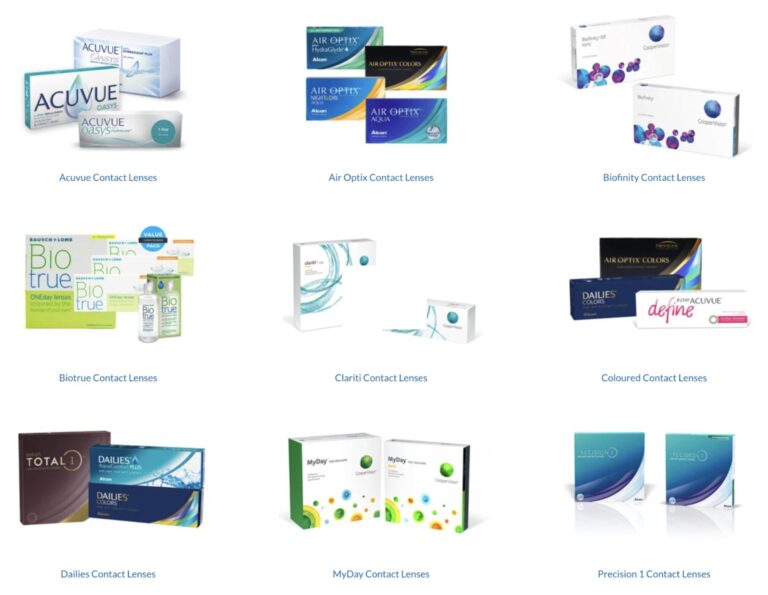
Once you have your prescription, the real savings come from where you purchase your lenses. We offer competitive pricing on all major brands, from Acuvue and Air Optix to Biofinity and Dailies Total1, with a portion of every sale donated to the charity of your choice.
As a 100% Canadian family-owned company, we believe buying contacts should do more than save you money. It should reflect your values.
Ready to order your lenses? Browse our full selection of daily, biweekly, and monthly contact lenses at Contacts For Less, and support a retailer that gives back with every purchase.
We will never sell your information to anyone.