
 United States
The Best Daily Disposable Contact Lenses for Comfort and Convenience

Paul Slusher
CEO
Published May 21st, 2026
Daily disposable lenses now account for 45-49% of all contact lens usage (Mordor Intelligence, 2025). Nearly half of all contact lens wearers have switched to fresh-lens convenience. But here’s the real challenge: with Acuvue, Alcon, Bausch + Lomb, and CooperVision all competing for your eyes, choosing the best daily disposable contacts can feel overwhelming.
Should you prioritize moisture technology for dry eyes? Do you need a toric lens for astigmatism? Is the premium option actually worth the extra cost, or will a mid-tier daily suffice?
This guide breaks down the top daily disposables by use case. Whether you’re dealing with dry eyes, astigmatism, screen-heavy workdays, or you simply want affordable everyday comfort, we’ll help you find the right fit. We’ll cover lens technologies, real sales performance data, specialty options for medical conditions, and the common pitfalls that trip up first-time daily wearers.
Let’s find the lens that actually works for your eyes, your lifestyle, and your budget.
What Makes a Great Daily Disposable Contact Lens?
The core appeal of daily disposables is straightforward: you wear a fresh lens every morning and toss it at night. No cleaning solutions. No storage cases. No protein buildup from weeks of wear. For allergy sufferers and anyone prone to eye infections, this hygiene advantage is significant.
But not all daily lenses deliver the same comfort. The factors that separate good dailies from great ones come down to three areas: oxygen permeability, moisture technology, and fit stability.
Silicone hydrogel is the material that changed the game. Traditional hydrogel lenses allow some oxygen to reach your cornea, but silicone hydrogel lenses allow significantly more. This matters because your cornea needs oxygen to stay healthy and comfortable, especially if you’re wearing lenses for 10+ hours a day. According to Contact Lens Spectrum (2025), silicone hydrogel lenses are now used in 66% of all contact lens fittings, and they hold 60.9% market share in daily disposables (EuromContact, 2025).
Moisture technology varies by brand. Some lenses use internal wetting agents that release moisture throughout the day. Others use water-gradient designs in which the lens surface approaches nearly 100% water content. The right choice depends on your tear film and how your eyes respond to different materials.
UV protection is built into some daily lenses but not others. While UV-blocking contacts don’t replace sunglasses, Class 1 and Class 2 UV protection adds a layer of defense for outdoor wearers.
Understanding these factors helps you evaluate options beyond brand names and marketing claims.
Best Daily Contact Lenses by Category
Different eyes and lifestyles need different lenses. Below, we break down the top daily disposables by category to help you find the best match for your specific situation.
Best Overall Daily Contacts for Comfort
For general comfort across a wide range of prescriptions and wearing conditions, three lenses consistently outperform the competition.
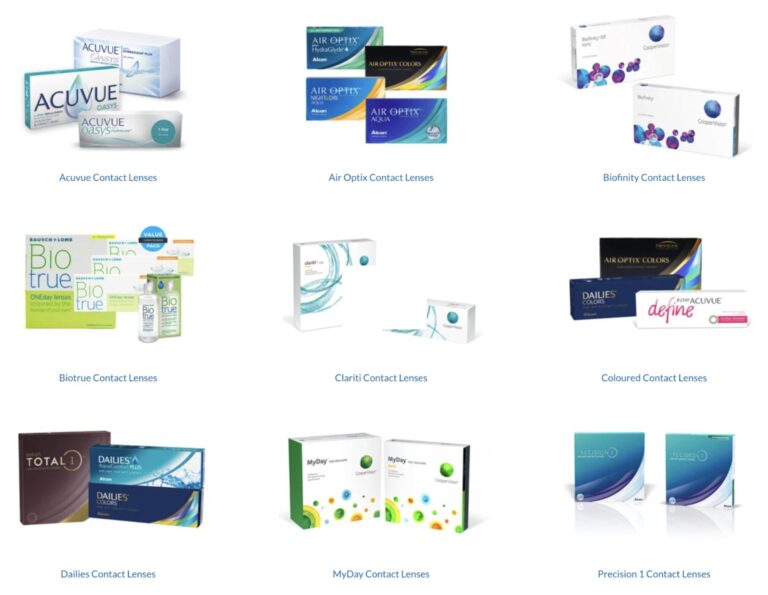
1-Day Acuvue Moist remains one of the most popular daily disposables in North America. It ranked #1 in 2025 sales data (LensDirect), and for good reason. The Lacreon technology embeds a moisture-rich wetting agent directly into the lens, which helps maintain comfort throughout the day. It also includes Class 2 UV protection. For straightforward, reliable daily wear, Acuvue Moist is the benchmark.
Acuvue Oasys 1-Day with HydraLuxe steps up the moisture game for demanding environments. If you spend your day staring at screens, working in air-conditioned offices, or flying frequently, HydraLuxe technology integrates tear-like molecules that work with your natural tear film rather than competing against it. This lens also offers Class 1 UV protection, the highest available level for contact lenses. For a deeper dive into the Acuvue lineup, check out our Ultimate Guide to Acuvue Contact Lenses.
Precision1 from Alcon uses SMARTSURFACE technology to create a microthin layer of moisture on the lens surface. The outer layer is over 80% water, which reduces friction and helps the lens feel smooth throughout the day. It’s a strong mid-tier option for comfort-focused wearers who want silicone hydrogel performance without the premium price tag of Dailies Total1.
These three lenses balance moisture retention, oxygen flow, and consistent fit across most prescriptions.
Best Daily Contact Lenses for Dry Eyes
Dry eye affects roughly 50% of contact lens wearers (Warby Parker / Industry data, 2025). If your eyes feel gritty, tired, or uncomfortable by mid-afternoon, lens choice matters more than most shoppers realize.
DAILIES TOTAL1 from Alcon is the premium standard for dry eye sufferers. Its Water Gradient Technology is the key differentiator: the core of the lens is silicone hydrogel for maximum oxygen flow, but the outer surface approaches nearly 100% water content. Your eyelid glides over the lens rather than dragging against it. For severe dry eye, this design reduces the friction that causes end-of-day discomfort.
Biotrue ONEday from Bausch + Lomb takes a different approach. Designed to mimic the eye’s natural biology, this lens uses HyperGel material that matches the human cornea’s water content (78%). Clinical data shows it maintains 98% of its moisture for a full 16 hours. For dry eye wearers who want strong performance without the premium price, Biotrue is a solid mid-tier choice. We cover this lens in detail in our 5 Best Daily Contacts for Dry Eyes guide.
Acuvue Oasys 1-Day lands between the two. HydraLuxe technology provides excellent moisture retention for moderate dry eye, and the silicone hydrogel base delivers high oxygen permeability. If Dailies Total1 is outside your budget but you need more moisture than standard dailies provide, Oasys 1-Day is the practical middle ground.
Dry Eye Tip: If you work on screens for 8+ hours daily, look for lenses with moisture-lock or water-gradient technology. Blinking less at screens accelerates tear evaporation, and your lens needs to compensate.
For severe or autoimmune-related dry eye, daily disposables may not be enough. We’ll cover specialty options like scleral lenses in the medical conditions section below.
Best Daily Disposable Contacts for Astigmatism
Toric lenses for astigmatism are among the fastest-growing segments in the contact lens market. Together, toric and multifocal lenses comprised over 30% of contact lens demand in 2025 (SNS Insider 2025). over 30% of contact lens demand in 2025 (SNS Insider). Three toric lenses appeared in the top 10 best-selling daily disposables in 2025 sales data (LensDirect), signaling that options have expanded significantly.
Acuvue Oasys 1-Day for Astigmatism combines HydraLuxe moisture technology with Accelerated Stabilization Design (ESD). Toric lenses need to stay oriented correctly on your eye, or your vision will shift every time you blink. The weighted stabilization zones in this lens keep it locked in place, even during movement. Class 1 UV protection is included. For astigmatism wearers who also deal with dry or demanding environments, this is the leading option.
Precision1 for Astigmatism from Alcon uses SMARTSURFACE technology combined with PRECISION BALANCE 8|4 design. The stabilization system uses eight zones and four points to keep the lens aligned. For consistent vision throughout the day, this design performs well across a range of astigmatism prescriptions.
1-Day Acuvue Moist for Astigmatism and Clariti 1-Day Toric provide additional options at different price points. If you’re comparing daily vs monthly contacts for your toric prescription, note that daily toric options have expanded significantly in recent years.
The common concern about toric dailies is cost. Historically, astigmatism wearers had fewer daily options and paid more per lens. While toric dailies still cost more than spherical lenses, pricing has improved as competition has increased.
Best Coloured Daily Contact Lenses
The cosmetic contact lens segment is growing at 5.39% CAGR (Market research, 2025), and coloured dailies now combine aesthetic appeal with comfort technologies. You don’t have to sacrifice eye health for appearance.
1-Day Acuvue Define takes a different approach than traditional coloured lenses. Instead of changing your eye colour entirely, Define uses a limbal ring and subtle patterning to enhance your natural iris. The effect is more defined, vibrant-looking eyes without an obviously artificial appearance. Lacreon technology provides moisture and Class 2 UV protection.
Dailies Colors and FreshLook One-Day offer more dramatic colour changes for wearers who want to transform their look. These lenses are available in both prescription and non-prescription (plano) versions.
One important note: even plano coloured lenses require proper fitting. An ill-fitting cosmetic lens can cause the same comfort issues and risks as an ill-fitting prescription lens. Always buy from authorized retailers to ensure lens quality and safety. For tips on selecting cosmetic lenses online, see our guide on How to Choose Coloured Contact Lenses Online.
Daily Contact Lenses at a Glance: Quick Comparison
Use this table to compare the top daily disposables across categories:
Daily Contact Lens Comparison
| Lens Name | Brand | Best For | Key Technology | Material | UV Protection |
| 1-Day Acuvue Moist | Johnson & Johnson | Overall comfort | Lacreon | Hydrogel | Class 2 |
| Acuvue Oasys 1-Day | Johnson & Johnson | Dry/demanding environments | HydraLuxe | Silicone hydrogel | Class 1 |
| Dailies Total1 | Alcon | Dry eyes (premium) | Water Gradient | Silicone hydrogel | No |
| Precision1 | Alcon | All-day comfort | SMARTSURFACE | Silicone hydrogel | No |
| Biotrue ONEday | Bausch + Lomb | Dry eyes (mid-tier) | HyperGel | Hydrogel | No |
| MyDay | CooperVision | Comfort + oxygen | Smart Silicone | Silicone hydrogel | No |
| clariti 1 day | CooperVision | Value + oxygen | WetLoc | Silicone hydrogel | Yes |
| Acuvue Oasys 1-Day for Astigmatism | Johnson & Johnson | Astigmatism + dry eyes | HydraLuxe + ESD | Silicone hydrogel | Class 1 |
| Precision1 for Astigmatism | Alcon | Astigmatism | SMARTSURFACE + PRECISION BALANCE | Silicone hydrogel | No |
| 1-Day Acuvue Define | Johnson & Johnson | Natural enhancement | Lacreon | Hydrogel | Class 2 |
For current pricing, see our breakdown of How Much Are One-a-Day Contacts in Canada?.
Can You Wear Daily Contacts with Autoimmune Conditions or Glaucoma?
This is where most “best daily contacts” articles stop. But real shoppers ask questions about lupus, Sjögren’s syndrome, and glaucoma, and those questions deserve direct answers.
Sjögren’s Syndrome
Sjögren’s syndrome attacks moisture-producing glands, including tear glands. The resulting severe dry eye makes contact lens wear challenging. For mild cases, a high-moisture daily like DAILIES TOTAL1 may provide adequate relief. The water gradient design reduces friction and minimizes tear production.
For moderate-to-severe dry eye from Sjögren’s, your eye care provider may recommend scleral lenses instead. Scleral lenses vault over the cornea entirely and hold a reservoir of fluid against your eye throughout the day. According to Contact Lens Spectrum (2025), 58% of practitioners indicated scleral lenses have the greatest growth potential in 2026, largely because they serve severe dry eye cases that daily disposables cannot adequately address.
Lupus
The American Academy of Ophthalmology confirms that patients with lupus can wear contact lenses. However, dry eye is common in lupus, and the condition can lead to other eye complications that require monitoring. If you have lupus, work with your eye care provider to determine whether daily disposables, specialty lenses, or an alternative approach is most appropriate. Daily disposables may work well for mild cases, but your provider needs to evaluate your specific situation.
Glaucoma
Current daily disposable lenses do not treat or monitor glaucoma. However, smart contact lens technology is emerging. IOP (intraocular pressure) monitoring lenses are expected to appear in specialty practices by 2026 (Glaucoma Research Foundation). These lenses would allow continuous pressure monitoring, potentially replacing or supplementing traditional tonometry. This is future technology, not a current retail option, but it’s worth watching if glaucoma management is a priority for you. For more on glaucoma basics, see our overview on Glaucoma: What is it and Why Should You Be Concerned.
> Important: If you have lupus, Sjögren’s syndrome, glaucoma, or another condition affecting your eyes, consult your eye care professional before choosing contact lenses. Daily disposables may work for some patients, but specialty lenses, such as sclerals, are often the better solution for severe dry eye.
Daily vs. Monthly Lenses: Is the Switch Worth It?
The upfront math seems simple: a box of monthly lenses lasts longer than a box of dailies. But the real cost comparison is more nuanced.
Direct Costs
A 90-pack of daily disposables lasts three months. A box of monthly lenses lasts six months, but you’ll also spend $15-25 on contact lens solution every month, plus periodic case replacements. When you factor in solution costs, the total price difference between dailies and monthlies often shrinks significantly.
Hidden Costs
Monthlies require daily cleaning and proper storage. Skip the cleaning or reuse old solution, and you increase your risk of infection, irritation, and protein buildup. Dailies eliminate that risk entirely. You’re wearing a sterile lens every morning.
Convenience Factor
No cleaning routine. No forgetting when you last replaced your lenses. No worrying about whether you packed a solution for travel. For allergy sufferers, dailies can be transformative. You’re not re-inserting a lens that’s been collecting pollen and dust for two weeks.
When Monthlies May Still Make Sense
Some prescriptions, especially complex torics or multifocals, have more options in monthly formats. Some wearers genuinely prefer the routine of monthlies. And if you only wear contacts occasionally, monthly lenses with proper care may offer better value than daily lenses that go unused.
For most wearers, though, the hygiene and convenience advantages of dailies outweigh the modest cost difference. For a more in-depth comparison, see our full breakdown of Daily vs. Monthly Contacts.
Common Pitfalls When Choosing Daily Contacts
Even informed shoppers make these mistakes. Here’s how to avoid them.
Pitfall 1: Choosing Based on Price Alone
The cheapest daily lens may not have the oxygen permeability or moisture technology your eyes need. A lens that saves you $20 per box but leaves your eyes dry and uncomfortable by 2 PM is not a bargain. Start with your eyes’ requirements, then find the best value within that range.
Pitfall 2: Ignoring Material Differences
Silicone hydrogel and traditional hydrogel are not interchangeable for all wearers. Silicone hydrogel delivers more oxygen but can feel different on the eye. Some wearers prefer the softer feel of traditional hydrogel despite lower oxygen transmission. Work with your eye care provider to determine which material is best for your eyes.
Pitfall 3: Skipping the Fitting
Even if you know your prescription, different lens brands fit differently. A lens that works perfectly for someone with the same prescription may not center well on your eye. Always get fitted for new lens brands, even if you’re just switching between dailies.
Pitfall 4: Overwearing Lenses
Daily disposables are designed for single-day use. Wearing them overnight or reusing them “just this once” significantly increases your risk of infection. If you need extended-wear capability, ask about lenses specifically approved for overnight use.
Pitfall 5: Buying from Unverified Sources
Grey-market lenses may be expired, improperly stored, or counterfeit. Buy from authorized retailers to ensure you’re getting a genuine product with proper handling. We cover this in detail in Beware Some Online Contact Lens Websites in Canada.
Key Takeaways
- Silicone hydrogel dominates: 66% of lens fits use silicone hydrogel materials (Contact Lens Spectrum / EuromContact 2025). For all-day comfort and long-term eye health, prioritize oxygen permeability.
- Match your lens to your needs: Dry-eye wearers should consider Water Gradient or HyperGel technologies. Astigmatism wearers have more toric daily options than ever before.
- Premium isn’t always necessary: Mid-tier options like Precision1 and Biotrue ONEday deliver strong performance without the premium price tag.
- Medical conditions require professional guidance: For Sjögren’s, lupus, or glaucoma, work with your eye care provider. Daily disposables may work for mild cases, but scleral lenses often better address severe dry eye.
- Total cost matters more than per-box price: When you factor in solution costs and hygiene advantages, dailies are often closer in cost to monthlies than they appear.
Next Steps
Start by identifying your primary need. Are you dealing with dry eyes, astigmatism, screen-heavy days, or general comfort? Use the comparison table above to narrow your options.
If you’re new to contacts or switching from monthlies, check out our Complete First-Time User’s Guide on How to Get Contacts for step-by-step guidance.
For current pricing on all the lenses discussed here, browse our full selection. At Contacts For Less, we’re a 100% Canadian family-owned company, and we donate a portion of every sale to the charity you choose.
Shop Contact Lenses with Free Shipping
Your eyes deserve the right lens, not just the most marketed one. Find the fit that works for you.
We will never sell your information to anyone.